
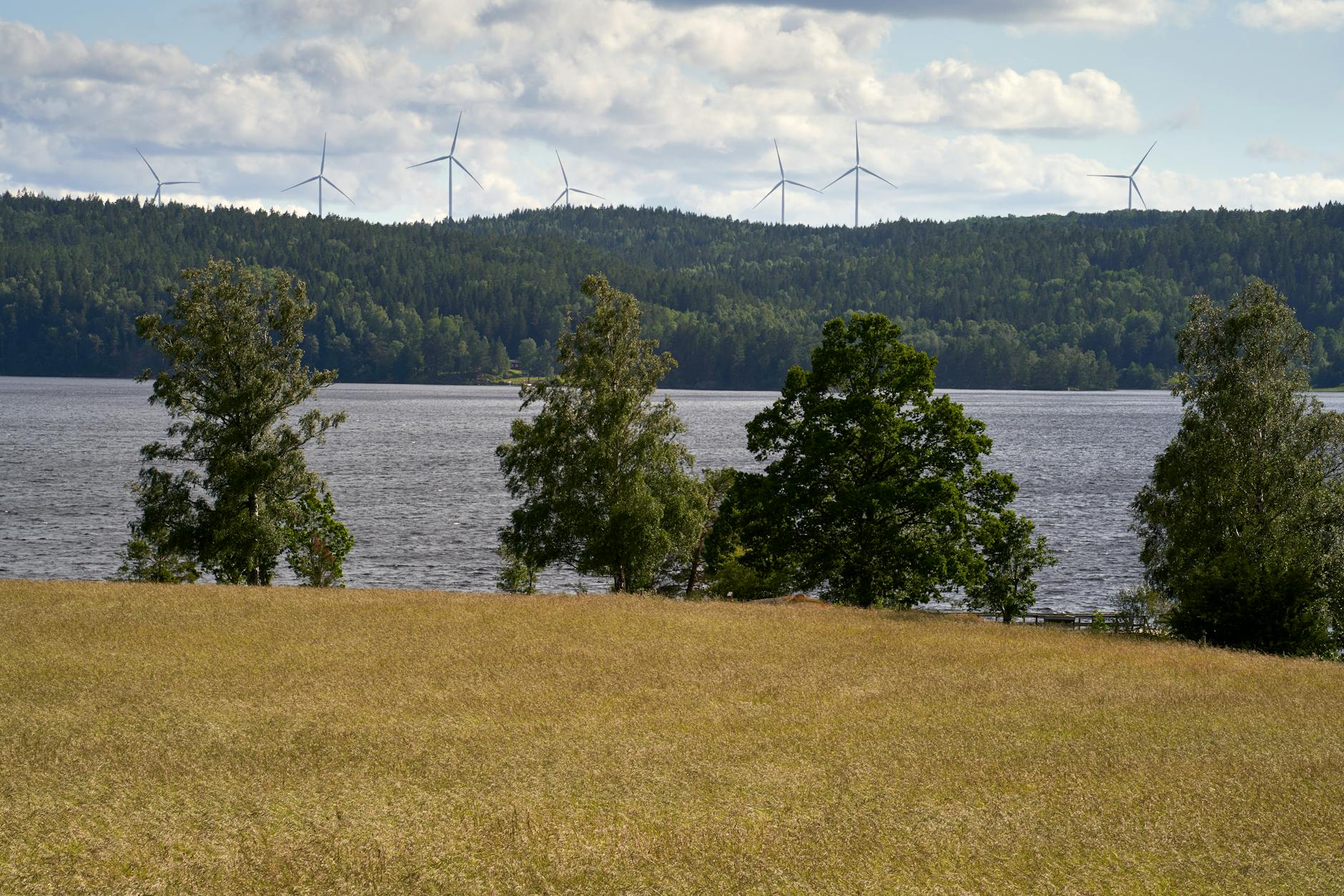
India’s renewable energy transition is no longer a vision — it is a commercial reality. With installed non-fossil fuel capacity exceeding 180 GW and annual capacity additions accelerating sharply, India has emerged as one of the world’s most dynamic clean energy markets. Solar continues to lead the way, wind is gaining scale, and green hydrogen combined with energy storage is transforming adjacent industrial opportunities.
Pawan Bhatnagar, Managing Director, Kasvu Consulting, analyses the renewable energy revolution in India over the last decade and provides recommendations for foreign investors and companies seeking market entry into India.
Global Commitments and National Targets
At COP26, India set ambitious decarbonisation goals: a net-zero emissions target by 2070 and a target of 500 GW non-fossil fuel capacity by 2030. This is accompanied by a commitment to reduce carbon intensity by over 45% by 2030, positioning renewables as the backbone of India’s future energy infrastructure.
These commitments underpin policy frameworks, international financing flows, and state-level energy planning, creating a predictable yet competitive environment for foreign participation.
India Today: Market Size & Segment Growth
- Total renewable capacity stands at approximately 184.6 GW, representing nearly half of India’s power mix. Solar accounts for the largest share, followed by wind, small hydro, and bioenergy.
- Solar deployment dominates investments and additions, accounting for nearly 77% of clean energy inflows in early 2025.
- Wind capacity has crossed 50 GW and is targeted to reach 100 GW by 2030, supported by strong domestic turbine manufacturing capacity.
Comprehensive capacity growth is driven by competitive auctions and merchant offtake models, making utility-scale renewables highly investable.
Segment-Wise Business Opportunities for Foreign Investors
Solar: Utility-Scale & Distributed
India’s solar growth remains the anchor of its renewable energy build-out.
- Utility-scale solar parks continue to attract international developers and financiers. Countries with advanced PV technologies, particularly high-efficiency modules and tracking systems, are well positioned in auction-based pipelines.
- Rooftop and distributed solar are expanding rapidly through initiatives such as the PM Surya Ghar Muft Bijli Yojana, targeting 10 million household installations by 2026–27.
- Solar manufacturing is a government priority, with Production Linked Incentive (PLI) schemes scaling domestic module, cell, and wafer production.
Opportunity hotspots include Gujarat, Rajasthan, Andhra Pradesh, and Tamil Nadu.
Wind Power: Onshore & Emerging Offshore
India’s wind sector offers multiple entry points for foreign participation.
- Onshore wind remains core, with steady auction pipelines supporting turbine supply, blades, generators, and digital monitoring solutions.
- Hybrid projects combining wind, solar, and storage are increasingly financed, offering higher plant utilisation factors and grid stability.
- Offshore wind is gaining momentum, with pilot zones in Gujarat and Tamil Nadu signalling future multi-gigawatt opportunities.
Key entry points include turbine supply chains, regional service hubs, and blended financing models with Indian partners.
Green Hydrogen & Derivatives
Green hydrogen represents India’s next industrial frontier.
- Under the National Green Hydrogen Mission, India targets 5 million metric tonnes of annual production by 2030, supported by investments of approximately USD 2.4 billion.
- Scaling hydrogen requires electrolyser manufacturing, renewable-linked power projects, and export infrastructure.
- Downstream applications such as green ammonia and green methanol for fertilisers, steel, and shipping are becoming mainstream.
Opportunity hotspots include hydrogen clusters in Gujarat and Andhra Pradesh, electrolyser manufacturing partnerships, and port-led export infrastructure.
Storage & Grid Integration
As renewable penetration increases, storage and grid balancing become critical.
- India’s storage requirements are projected to exceed 70 GW by 2032, spanning pumped hydro and battery energy storage systems.
- Ancillary grid services such as frequency regulation and peak shaving are expected to unlock high-value recurring revenue streams.
Government Incentives & Policy Architecture
India’s policy framework makes foreign participation structurally attractive.
- 100% FDI is permitted under the automatic route for generation, transmission, and distribution projects.
- PLI schemes for solar and hydrogen manufacturing enhance returns and support localisation.
- Transmission charge waivers, renewable purchase obligations, and viability gap funding reduce market entry barriers.
Kasvu Consulting’s Market Insights & Recommendations
- Local partnerships are strategic must-haves: Joint ventures with Indian EPCs and developers provide access to auctions and regulatory networks.
- Integrate up the value chain: Move beyond equipment supply into O&M, asset management, hybrid solutions, and storage integration.
- Target adjacent industrial use cases: Align renewable output with industrial clusters, data centres, and hydrogen demand.
- Mitigate country risk through financial structuring: Use blended capital with DFIs, export credit agencies, and domestic banks.
In a landscape defined by ambitious targets and expanding pipelines, India offers renewable energy opportunities far beyond power generation — spanning hydrogen, storage, grid services, and manufacturing ecosystems.
Frequently Asked Questions
How large could India’s renewable energy market become by 2030?
India aims to produce around 50% of its electricity from non-fossil fuel sources by 2030, supported by large-scale investments in solar, wind, transmission infrastructure, and emerging technologies such as green hydrogen. This expansion could make India one of the world’s largest renewable energy investment destinations during the next decade.
Which renewable energy segments in India offer the strongest growth potential?
Solar power continues to dominate capacity additions, but strong growth is also emerging in energy storage, grid modernisation, green hydrogen, and offshore wind. These segments are attracting investment because they address the next phase of the energy transition—balancing intermittent renewable generation and scaling industrial decarbonisation.
What market entry strategies work best for foreign companies in India’s renewable sector?
Successful foreign entrants typically combine local partnerships, project-level collaboration, and gradual localisation of technology or manufacturing. Partnering with Indian developers, EPC firms, or state utilities allows international companies to navigate regulatory processes, secure project pipelines, and adapt solutions to India’s cost-sensitive market conditions.
What structural challenges could slow India’s renewable energy expansion?
Despite rapid growth, challenges remain around land acquisition, grid integration, storage deployment, and policy coordination across states. Addressing these constraints will require investment in transmission infrastructure, improved regulatory alignment, and continued innovation in energy storage and demand-side management technologies.
Published by Kasvu Consulting | Experts in Finland–India Business Synergies | Contact for full analysis or bespoke market entry strategies | June 2025
Never miss Kasvu’s latest India market-entry insights — add us as a preferred source on Google.
Add Kasvu as Preferred Source

